November 23, 2026
Steps to Prepare Your Locks for Commercial Rekeying After Staff Changes
By @doorandkey
Why Staff Changes Call for a Lock Refresh
When an employee leaves, whether on good terms or not, the keys they carry represent a lingering risk. A former team member may have made copies, handed their key to someone else, or simply forgotten to return it. For a business, the practical solution is commercial rekeying: changing the internal pins of a lock so that old keys no longer work while the lock hardware stays in place. This approach keeps your storefront door, office entry, or storage area secure without the expense of replacing every cylinder. The process, however, requires careful planning if you want it to go smoothly and cover all the right doors.
Step 1: Take Stock of Every Key and Every Lock
Before you call a locksmith, you need a clear picture of what you have. Walk through your property and list every lock that is used for business access. Include the main entrance, side doors, back exits, interior offices, supply closets, and any gate or parking lot entry. Note the type of lock on each door: a standard knob set, a deadbolt, a panic bar with a built-in lock, or a high-security commercial cylinder. Also check any cabinets that hold sensitive documents or expensive tools. A key cabinet that uses a lockable latch is often overlooked but should be rekeyed if it was accessed with the same key system.
Make a note of which employees had keys to which doors. If your business uses a master key system, list the levels: a grand master key that opens everything, sub-master keys for departments, and individual keys for specific doors. This record will help the locksmith understand how the new keying should work and whether you want to keep or change the hierarchy. Watch out for doors that have not been used in months; their locks may be seized or have worn pins that a rekey alone cannot fix.
Step 2: Decide on a New Keying Plan
Staff changes are a natural time to rethink your access structure. Ask yourself whether the departed employee truly needed keys to every area they had. If your business has grown or roles have shifted, you may want to tighten the system. For example, a warehouse worker no longer needs a key to the main office, or a manager who left had access to the IT server room that current supervisors do not need.

You have two main options: rekey to a single new key that works for all rekeyed locks, or rekey into a master key system where different keys open different doors. A master key system gives you flexibility: the owner or facility manager carries one key that opens everything, while each employee gets a key that opens only the doors relevant to their job. The trade-off is that a master key system requires more precise planning and a slightly higher cost. If your business is small and the same few people need access to every area, a single-key system is simpler and less expensive.
One more consideration: if you have an access control system integrated with electronic locks, rekeying the mechanical override cylinders is still important. The electronic part may control day-to-day entry, but the mechanical cylinder is the fail-safe. A former employee who knows the physical override key could still get in after hours. Coordinate with whoever manages your access control software so that the new keying matches the permissions you set electronically.
Step 3: Collect All Keys from Departing Staff
This step sounds obvious but is often skipped or done halfway. Ask the departing employee to return all keys they were issued, including any that open cabinets, mailboxes, or equipment rooms. If the employee had a key to the key cabinet itself, that key must come back too. Even if you plan to rekey, returning the keys prevents the locksmith from having to work around a missing original that might have been copied. It also gives you a chance to see whether the employee had keys to areas they should not have had access to, which can reveal a gap in your record-keeping.
If the employee left suddenly or refused to return keys, notify your locksmith so they can plan for a full rekey without relying on the old key. In that case, the locksmith may need to remove and disassemble each cylinder to change the pins, which takes a little longer but is still straightforward.
Step 4: Confirm Business Hours and Door Closer Condition
Commercial rekeying is a live-site job. You cannot shut down the business for an entire day in most cases. Talk to your locksmith about the best time to do the work. Early morning before opening, late evening after closing, or a weekend slot often works best. Let the locksmith know the exact hours your business operates and whether any doors must remain unlocked during certain times for deliveries or customer flow.
While you are looking at the doors, check the condition of each door closer. A door closer that is loose, leaking fluid, or misaligned can put stress on the lock cylinder and cause the rekey to wear out faster. If the closer is failing, have it repaired or replaced before the rekey. Otherwise, the new pins and springs may bind or break because the door does not close fully. The same goes for the strike plate and frame alignment. A door that drags or sticks will cause problems for any lock, old or new.
Step 5: Schedule the Locksmith and Prepare the Site
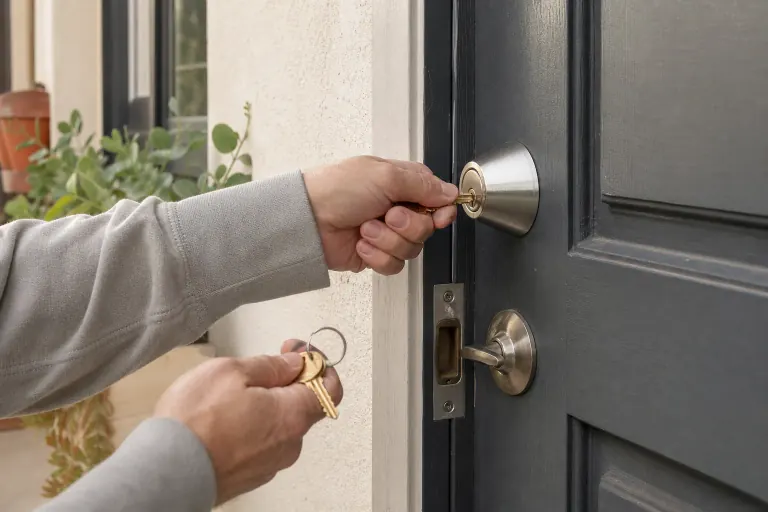
Once you have your list, your keying plan, and a time window, contact a locksmith service that handles commercial work. Explain that you need commercial rekeying for multiple doors and share the list of locks you prepared. A good locksmith will ask about your master key needs and the type of cylinders you have. If your locks are older or from a discontinued brand, they may recommend upgrading to a standard commercial cylinder that is easier to service in the future.
On the day of the appointment, clear the area around each door. Remove anything that blocks full access to the lock, such as furniture, boxes, or decorations. If a door has a panic bar, make sure the locksmith can reach the bar mechanism and the cylinder from both sides. Have the new key plan documented and ready to hand over. The locksmith will need to know which doors should be keyed alike and which should use a different key. If you use a service like RR Locksmith Connect to find a qualified provider, you can compare available locksmiths in your area and read their profiles before booking. That way you know the person arriving has experience with commercial systems.
Step 6: Oversee the Rekey and Test Every Lock
When the locksmith arrives, walk them through your property and point out every lock on your list. Stay nearby as they work on the first few doors so you can confirm the new keys work as intended. The locksmith will remove each cylinder, change the pin stack, and reassemble it. For a panic bar, they will rekey the bar's cylinder or replace it with a compatible one. For a storefront door with a rim cylinder, the process is similar but involves a tailpiece that connects to the latch.
After the work is done, test every lock yourself. Insert the new key, turn it, and make sure the latch or deadbolt moves freely. Test the lock from both the inside and outside if possible. If a door has a thumb turn on the inside, check that it still operates. For any door that is part of a master key system, test both the master key and the individual key. Do not assume everything works because the locksmith tested it. A small misalignment can cause a key to stick after a few uses, and catching it early saves a return visit.
Step 7: Secure Spare Keys and Update Records
Once you have a set of working new keys, decide how many spares you need. Order two or three extra keys per door for future use. Store them in a locked key cabinet that only authorized personnel can access. Label the keys clearly with the door or area they open, but avoid writing the name of the business on the key itself. If a key is lost outside, a finder should not be able to trace it back to your building.
Update your internal records with the new key codes and the date of the rekey. Note which employees received which keys and have them sign a key receipt form. This may feel like paperwork, but it creates a clear chain of custody. When the next staff change happens, you will know exactly who has what and what needs to be collected.

Step 8: Plan for Future Staff Changes
The best time to prepare for commercial rekeying is before you need it. Build a simple policy: every new employee signs a key agreement, and every departing employee returns keys as part of the exit process. If your business has high turnover, consider a lock system that allows quick rekeying without changing the entire cylinder. Some commercial cylinders are designed for fast rekeying with a special tool, which can reduce cost and downtime. Talk to your locksmith about whether your current hardware supports that feature.
A rekey after staff changes is not just about security. It also sends a message to remaining employees that the business takes access control seriously. When people know that keys are tracked and locks are updated, they are less likely to make unauthorized copies or lend their key to a friend. For businesses that rely on a service like RR Locksmith Connect to find a trusted locksmith, the process becomes straightforward: you describe your needs, compare providers, and schedule the work at your convenience. The result is a secure building and peace of mind, with no loose ends from the staff change.
❧